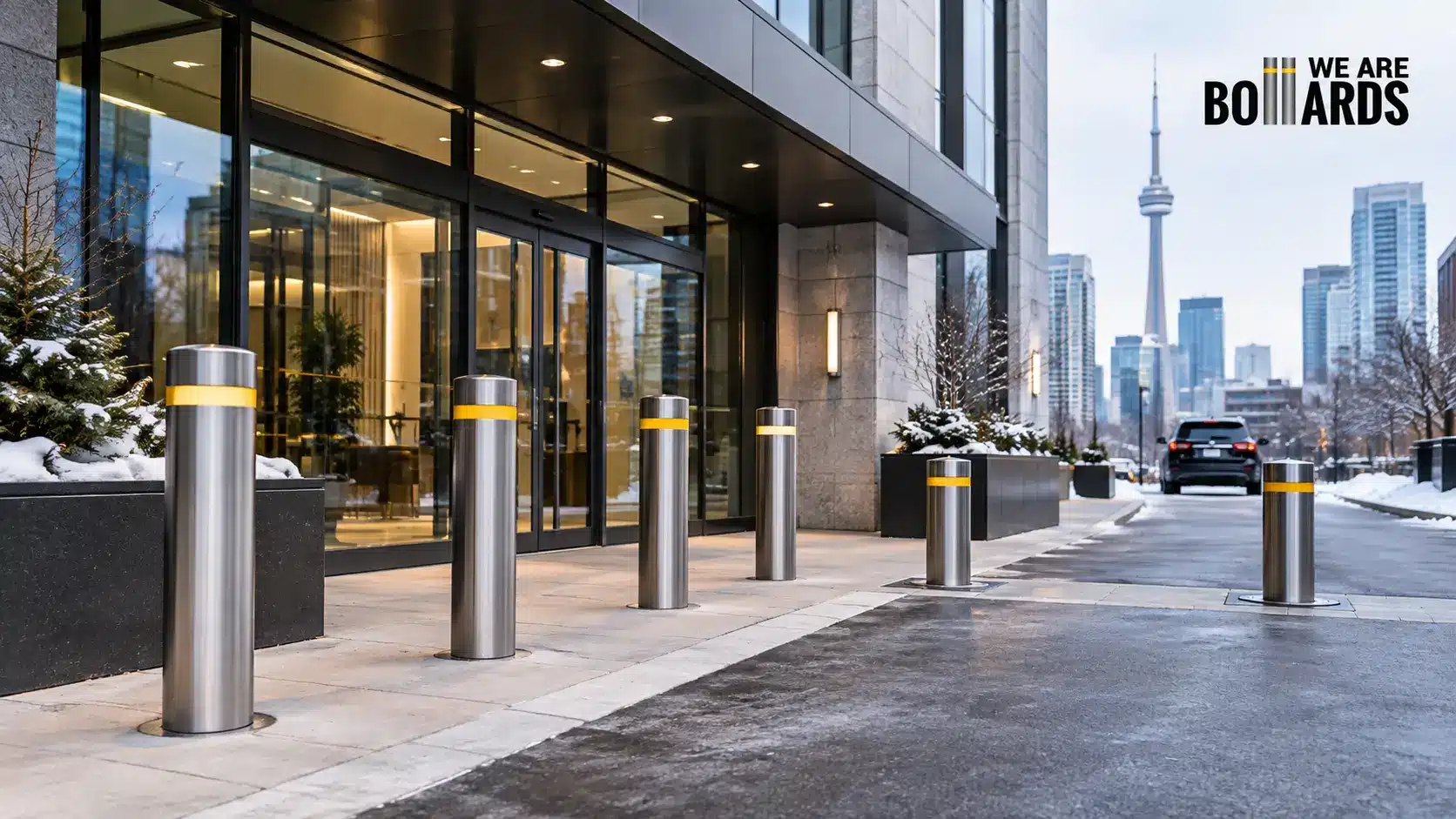
Vehicles end up where they shouldn’t more often than most Toronto property owners expect. A car can roll through a storefront entrance, a delivery truck can clip a loading dock corner, or a driver can misjudge a parking area. Security bollards provide a physical barrier that helps protect buildings, vehicles, equipment, and pedestrians from unwanted vehicle access.
This guide explains what security bollards are, which type may fit different Toronto properties, how installation works in local ground and climate conditions, and what to consider before choosing an installer.
What Are Security Bollards?
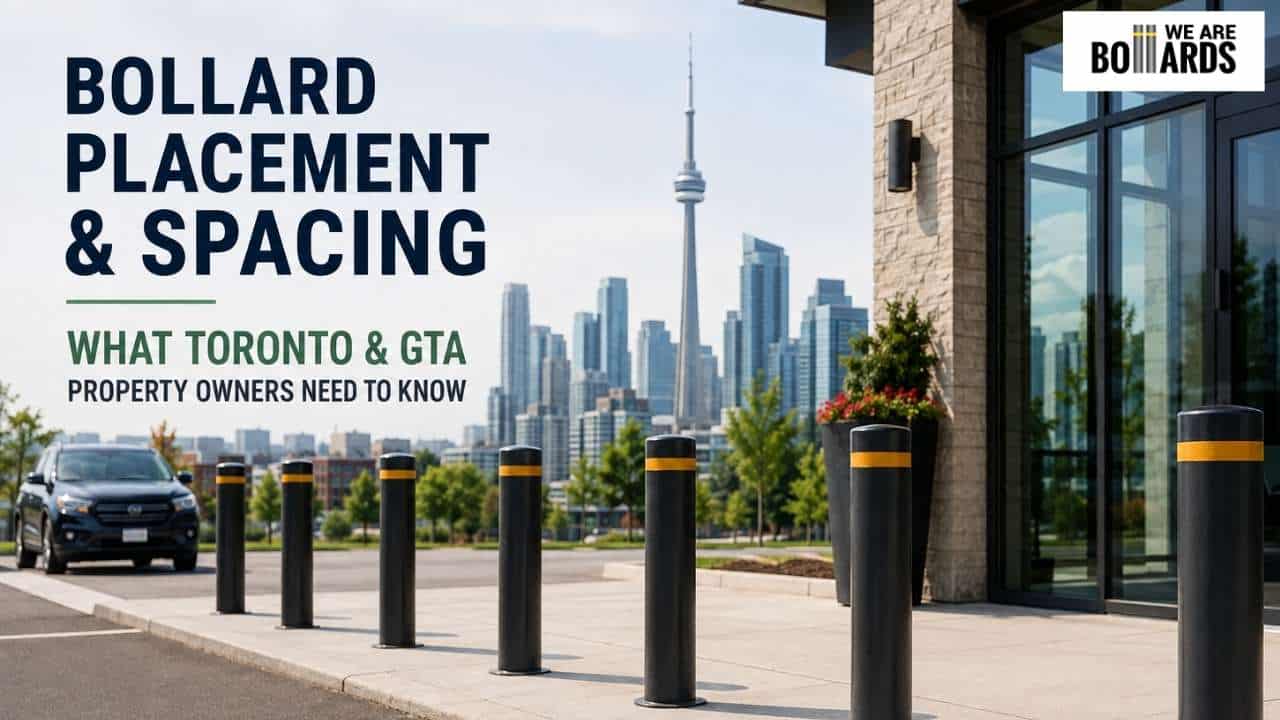
Security bollards are short, sturdy vertical posts installed at ground level to restrict or prevent vehicle access to a protected area while still allowing pedestrians to move through.
They are commonly used around storefronts, parking areas, driveways, sidewalks, commercial properties, and other areas where vehicles need to be controlled or kept away from buildings and people.
Unlike a decorative post or parking curb, a security bollard is designed to provide a stronger physical barrier. The foundation and installation method are important parts of the overall system, not just the visible steel above ground.
For permanent protection, fixed bollards provide a continuous physical barrier without moving parts or a power connection.
Why Toronto Properties Use Security Bollards
Toronto property owners use security bollards to protect people, structures, vehicles, and equipment from unwanted vehicle access.
Common applications include:
- Storefront and glazing protection where parking or vehicle movement is close to building entrances
- Driveway protection for residential and commercial properties
- Pedestrian protection around sidewalks, walkways, patios, and building entrances
- Loading area protection around building corners, equipment, and other vulnerable areas
- Access control at driveways, private parking areas, and controlled entrances
- Asset protection around exposed equipment and property features
The right bollard depends on how the area is used. A location that needs permanent protection may be better suited to fixed bollards, while an entrance that needs regular vehicle access may benefit from a retractable system.
For properties where vehicle access needs to be controlled without running electrical wiring, battery-powered automatic bollards provide a remote-operated option.
Types of Security Bollards
Fixed Bollards
Fixed bollards are permanently installed into a concrete footing and are designed for locations where vehicle access should remain restricted.
They are suitable for storefronts, sidewalks, parking areas, driveways, commercial buildings, and other locations requiring permanent protection.
Because they have no moving parts or electrical connection, fixed bollards are a straightforward option for long-term protection with minimal maintenance.
Bolt-Down Bollards
Bolt-down bollards are installed directly onto an existing concrete surface rather than using the same in-ground installation approach as traditional fixed bollards.
They can be useful where a property already has a suitable concrete surface and the installation requirements make surface-mounted protection practical.
Before choosing this option, the existing surface and site conditions should be assessed to make sure the installation method is appropriate.
Manual Retractable Bollards
Manual retractable bollards provide protection while allowing the bollard to be lowered when authorised vehicle access is required.
They are operated manually and do not require electricity. This makes them suitable for driveways and other locations where vehicle access is needed occasionally but permanent protection is still important.
WeAreBollards’ manual retractable bollards use a 316 stainless steel cylinder and are designed for outdoor use in harsh weather conditions.
Battery-Powered Automatic Bollards
Battery-powered automatic bollards provide controlled vehicle access without requiring a traditional wired power connection.
They use rechargeable battery power and can be operated remotely, making them useful for properties where vehicle access is more frequent and convenience matters.
They are particularly relevant for private driveways, commercial entrances, parking areas, and other controlled-access locations where manually raising and lowering a bollard would be inconvenient.
WeAreBollards states that its battery-powered and manual retractable bollards are designed for Canadian winter conditions and rated to -40°C.
Bollard Covers and Sleeves
Bollard covers can improve the appearance and visibility of an installed bollard while helping it fit better with the surrounding property.
They can be particularly useful around storefronts, commercial buildings, parking areas, and other locations where the appearance of the security installation matters.
Flexible Delineator Posts
Flexible delineator posts are designed to identify boundaries and guide traffic rather than provide the same physical protection as a structural security bollard.
This distinction matters when comparing products. A flexible delineator can help communicate where vehicles should travel, but a property owner looking for physical vehicle protection should consider an appropriate structural bollard instead.
Comparing the Main Options
| Type | Vehicle Access | Main Use | Best Fit |
|---|---|---|---|
| Fixed | No regular access | Permanent vehicle protection | Storefronts, buildings, parking areas, driveways |
| Bolt-down | Permanent installation | Surface-mounted protection | Suitable existing concrete surfaces |
| Manual retractable | Occasional controlled access | Flexible vehicle protection | Driveways and controlled entrances |
| Battery-powered automatic | Frequent controlled access | Automated access control | Driveways, commercial entrances, parking areas |
| Flexible delineator | Traffic guidance | Boundary and traffic guidance | Locations needing visual traffic control |
The right option depends less on choosing the most complicated system and more on understanding how the property actually needs to function.
Fixed vs. Retractable vs. Bolt-Down: Which One Do You Actually Need?
The short answer: if vehicles should not enter a protected area, fixed bollards are a straightforward choice. If authorised vehicles need to pass through occasionally, manual retractable bollards can provide flexibility. If vehicle access is frequent and you want remote operation without traditional wiring, battery-powered automatic bollards may be more suitable.
If the property already has an appropriate concrete surface, bolt-down bollards may also be worth considering.
The deciding factors are:
- How often vehicles need access
- Whether someone needs to operate the bollard manually
- Whether remote operation is important
- What surface the bollard will be installed on
- Where the bollards need to be positioned
- What level of physical protection the site requires
A common mistake is choosing a retractable system where fixed protection would be simpler, or installing fixed bollards at an entrance that regularly needs vehicle access.
If you’re unsure which system fits your property, contact WeAreBollards for help choosing the right bollard.
Standard Security Bollards vs. Site-Specific Protection
Not every property requires the same type of vehicle protection.
A storefront close to a parking area has different requirements from a private driveway or a commercial entrance with frequent vehicle movement. The approach speed, vehicle type, site layout, pedestrian movement, surface, and installation conditions should all be considered before selecting a system.
Rather than automatically choosing the most expensive or complex bollard, property owners should first identify what the bollard needs to accomplish.
For many applications, fixed bollards provide permanent protection without moving parts or electrical requirements.
Where vehicle access is required, manual retractable bollards or battery-powered automatic bollards may provide a better functional fit.
For a site with an unusual risk profile or specific engineering, insurance, or authority requirements, confirm the required specifications with the appropriate professional before installation.
Applications by Property Type
Retail storefronts and plazas. Fixed bollards can be positioned near building entrances, storefronts, and pedestrian areas where vehicles need to be kept away from vulnerable areas.
Parking lots and driveways. Bollards can help control vehicle movement and protect areas where unauthorised vehicle access is a concern. Fixed bollards are suitable for permanent protection, while retractable options can be considered where authorised vehicles need regular access.
Warehouses and commercial properties. Bollards can help protect building corners, equipment, entrances, and other areas exposed to vehicle movement. Site layout and vehicle movement should be assessed before installation.
Condos and mixed-use buildings. Retractable bollards can provide controlled access at selected entrances, while fixed bollards can protect building entrances and other areas where vehicle access should remain restricted.
Patios and pedestrian zones. Bollards can help separate pedestrian areas from vehicle movement. Spacing and placement should be planned carefully so that the installation does not interfere with accessible routes.
Municipal and institutional properties. Public-facing properties may have additional requirements depending on the location and surrounding infrastructure. Coordination with the relevant authority may be required before installation.
If your property also needs a controlled driveway or entrance, WeAreBollards provides gate systems in Toronto that can be planned alongside bollards.
How Security Bollards Are Installed
Short answer: installation involves assessing the site, determining the appropriate installation method, preparing the location, installing the bollard, and restoring the surrounding surface where required.
1. Site Assessment
An installer should review the intended bollard locations, vehicle movement, pedestrian routes, existing surface, drainage, and access requirements before recommending a product.
This is particularly important when choosing between fixed, bolt-down, manual retractable, and battery-powered automatic bollards.
2. Utility Locates
Before excavation, underground utilities need to be identified and marked.
In Ontario, this process is handled through Ontario One Call. Underground gas, hydro, telecommunications, water, and private utilities can affect where bollards can safely be installed.
3. Surface Preparation and Excavation
The installation method depends on the bollard selected.
In-ground fixed and retractable bollards require excavation and an appropriate foundation. Bolt-down bollards use a surface-mounted installation method and therefore require a suitable existing surface.
The exact foundation requirements should be determined from the selected product and site conditions rather than applying one depth to every project.
4. Foundation and Setting
For in-ground systems, the bollard is positioned and aligned before the foundation is completed.
The installation needs to account for the local ground conditions, expected vehicle movement, drainage, and long-term stability.
5. Cure Time
Concrete needs adequate time to reach the required strength before the area is returned to normal vehicle use.
The exact time depends on the installation and concrete conditions.
6. Finishing
The surrounding surface can then be restored as required.
Depending on the site, this may involve concrete, asphalt, pavers, or another existing surface.
For professional installation, see the fixed bollard installation service or retractable bollard installation service.
Bollard Spacing: What to Consider
How far apart should bollards be installed?
Bollards need to be positioned close enough to control vehicle access while still allowing pedestrians, wheelchairs, and strollers to move through safely.
There is no single spacing number that works for every Toronto property. The correct spacing depends on the bollard type, vehicle movement, pedestrian requirements, site layout, and accessibility considerations.
A spacing plan should therefore be confirmed for the specific property rather than applying a fixed measurement to every installation.
Toronto-Specific Installation Considerations
Toronto’s climate and underground conditions can affect how bollards should be installed.
- Freeze-thaw conditions. Ground movement during winter can affect poorly planned installations, making appropriate foundation design important.
- Underground utilities. Dense underground infrastructure means utility locating should be completed before excavation.
- Winter maintenance. Snow clearing and salting around bollards should be considered during placement.
- Corrosion exposure. Road salt and moisture can affect exposed metal components, so material and finish matter.
- Installation conditions. Cold weather can affect excavation and concrete work, so installation timing and proper cold-weather practices should be considered.
WeAreBollards states that its retractable bollards are designed for Canadian winter conditions and rated to -40°C.
Choosing the Right Bollard for Your Property
Work through these questions before comparing quotes:
- Does this location need vehicle access? If never, fixed bollards may be the simplest option. If occasionally, consider manual retractable bollards. If frequent and remote operation is useful, consider battery-powered automatic bollards.
- What type of surface do you have? Existing concrete may make a bolt-down solution worth considering, while other applications may require an in-ground installation.
- How often will the bollard be operated? Occasional access can work well with a manual system, while frequent access may justify automatic operation.
- Who will operate it? If staff or property owners need to raise and lower the bollard, manual operation may be practical. If convenience is important, an automatic system can reduce manual effort.
- What does the property look like? Bollard covers and appropriate finishes can help the installation fit the surrounding property.
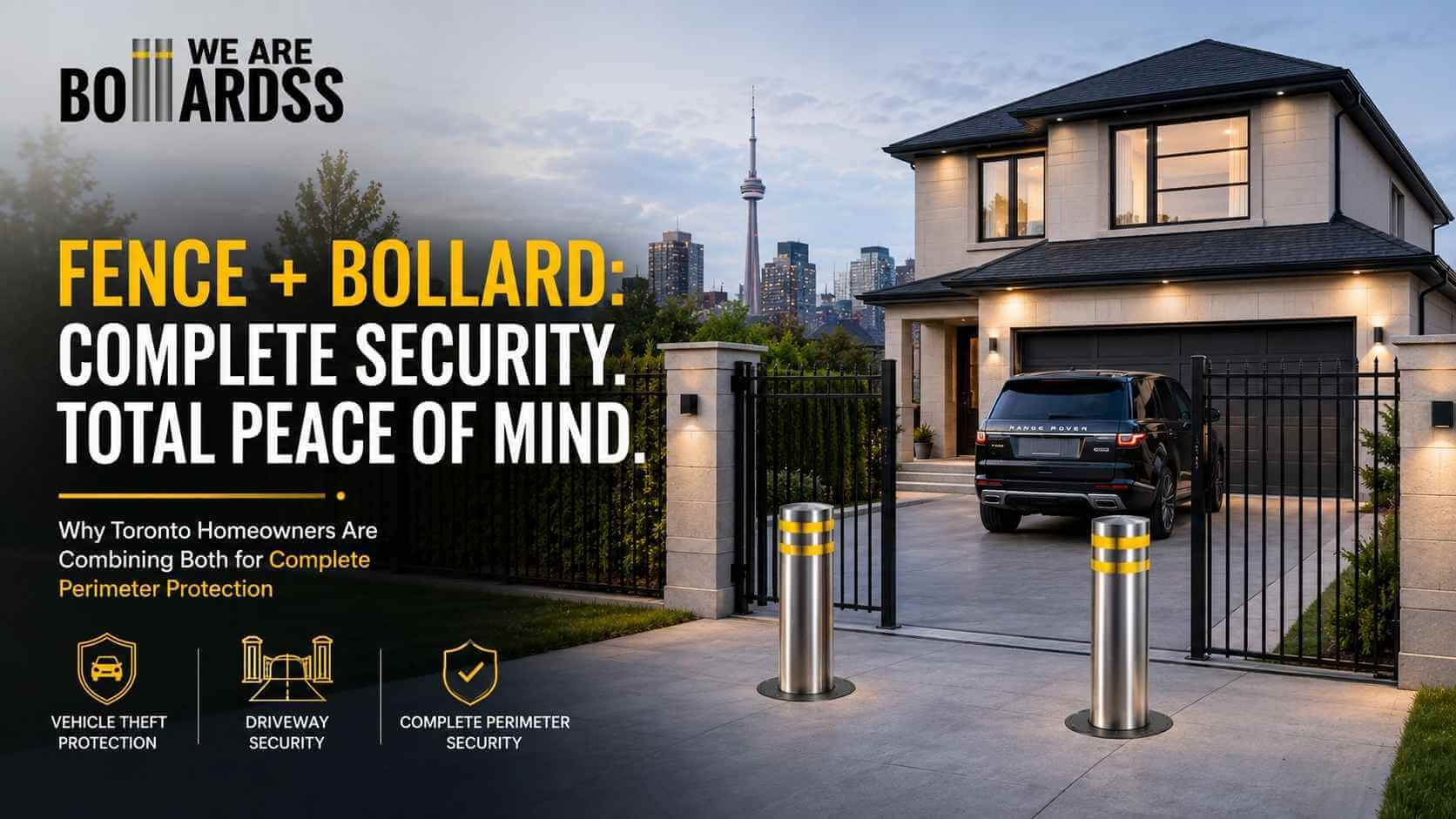
- Does the property also need gates or fencing? A combination of bollards, gates, and fencing can provide a more complete perimeter security approach.
If you’re unsure which option fits your site, request a quote from WeAreBollards and discuss the access requirements with the installation team.
What Affects Bollard Installation Cost in Toronto
Costs vary by site, product, quantity, and installation requirements.
The main factors include:
- Bollard type — fixed, bolt-down, manual retractable, and battery-powered automatic systems have different installation requirements
- Quantity and spacing — the number of bollards required depends on the area being protected
- Excavation requirements — in-ground installations require excavation and foundation work
- Existing surface — concrete, asphalt, pavers, and other surfaces can affect installation work
- Access requirements — automatic systems involve different equipment and operating considerations than fixed bollards
- Site conditions — underground utilities and difficult access can affect project requirements
- Surface restoration — disturbed concrete, asphalt, or other surfaces may need to be restored after installation
- Additional perimeter security — gates and fencing may be required for properties needing broader access control
An installer should assess the site before providing a project-specific quote rather than relying only on a generic per-bollard figure.
Maintenance and Long-Term Performance
Bollards are generally low-maintenance, but regular checks can help maintain performance:
- Inspect for impact damage after a vehicle strikes a bollard
- Check exposed surfaces for corrosion, especially after winter
- Maintain moving components on retractable systems according to the manufacturer’s recommendations
- Keep retractable bollard areas clear of accumulated snow, dirt, and debris
- Check automatic systems and batteries as recommended
- Monitor for movement around the foundation or installation area
WeAreBollards recommends de-icing spray during winter, removing accumulated snow, periodic lubrication, and cleaning for its retractable bollards.
Common Installation Mistakes
- Skipping the utility locate before excavation
- Choosing the wrong bollard type for the property’s access requirements
- Using a surface-mounted product where the existing surface is not suitable
- Failing to account for accessibility when planning spacing
- Treating flexible delineator posts as a substitute for structural bollards
- Ignoring snow clearing and winter maintenance when choosing bollard placement
- Installing a retractable system without considering how it will actually be operated and maintained
The goal is not simply to install a bollard. The goal is to install the right system in the right location for the way the property is actually used.
When Professional Installation Is Necessary
Professional installation is particularly important for commercial, industrial, and higher-risk applications because:
- Underground utilities need to be considered before excavation
- Foundation requirements depend on the selected product and site
- Incorrect alignment or installation can affect long-term performance
- Surface restoration needs to be completed properly
- Retractable systems need correct installation and operation
- Site-specific requirements may affect the appropriate installation method
WeAreBollards provides bollard installation in Toronto along with dedicated fixed bollard installation and retractable bollard installation services.
Questions to Ask Before Hiring a Bollard Installer
- What type of bollard is appropriate for my property?
- Does the site need fixed, bolt-down, manual retractable, or battery-powered automatic bollards?
- What installation method will you use?
- Will underground utilities be checked before excavation?
- What foundation requirements apply to this installation?
- What’s included in the quote?
- Will surface restoration be included?
- How long will installation take?
- What maintenance will the bollards require?
- Can the bollards be combined with gates or fencing if additional perimeter protection is needed?
If you already know where you need protection, request a quote and provide the installer with details about the property, surface, vehicle access, and preferred bollard operation.
Frequently Asked Questions
What are security bollards used for?
Security bollards create a physical barrier that helps control vehicle access around storefronts, driveways, pedestrian areas, parking areas, commercial properties, and other vulnerable locations.
What’s the difference between fixed and retractable bollards?
Fixed bollards are permanently installed and are designed for areas where vehicle access should remain restricted. Retractable bollards can be lowered when authorised vehicle access is required. WeAreBollards offers both fixed and manual retractable options, as well as battery-powered automatic bollards.
Which type of security bollard is right for my Toronto property?
It depends on how the area is used. Fixed bollards can suit permanent protection, manual retractable bollards can suit occasional vehicle access, and battery-powered automatic bollards can suit locations where frequent access and remote operation are important. Bolt-down bollards may also be suitable where an appropriate existing concrete surface is available.
How deep do security bollard foundations need to be in Toronto?
Foundation requirements depend on the bollard type, installation method, ground conditions, and site requirements. There is no single foundation depth that applies to every bollard installation. The installer should determine the appropriate foundation for the selected product and site.
Can bollards be installed in winter?
Installation can be possible during colder weather, but excavation and concrete work may require additional planning and appropriate cold-weather practices. The project conditions should be assessed before scheduling the work.
How much does bollard installation cost in Toronto?
The cost depends on the bollard type, quantity, installation method, existing surface, excavation requirements, and site conditions. A site-specific quote is the most reliable way to determine the project cost.
Do security bollards need a permit in Toronto?
Permit requirements depend on the property, location, scope of work, and whether the installation affects a public right-of-way. Confirm the applicable requirements before installation.
Can bollards be combined with gates and fencing?
Yes. WeAreBollards provides gate systems and fencing solutions that can be planned alongside bollards when a property requires broader perimeter protection.
Getting Started
If you’re considering security bollards for a Toronto storefront, driveway, parking area, or commercial property, the best starting point is to assess how the property is actually used.
Consider where vehicles enter, where pedestrians move, whether authorised vehicles need access, and whether you need permanent or controlled protection.
From there, the right bollard can be selected based on the property’s needs.
Explore the bollard product range or contact WeAreBollards to request a quote and discuss the right solution for your property.