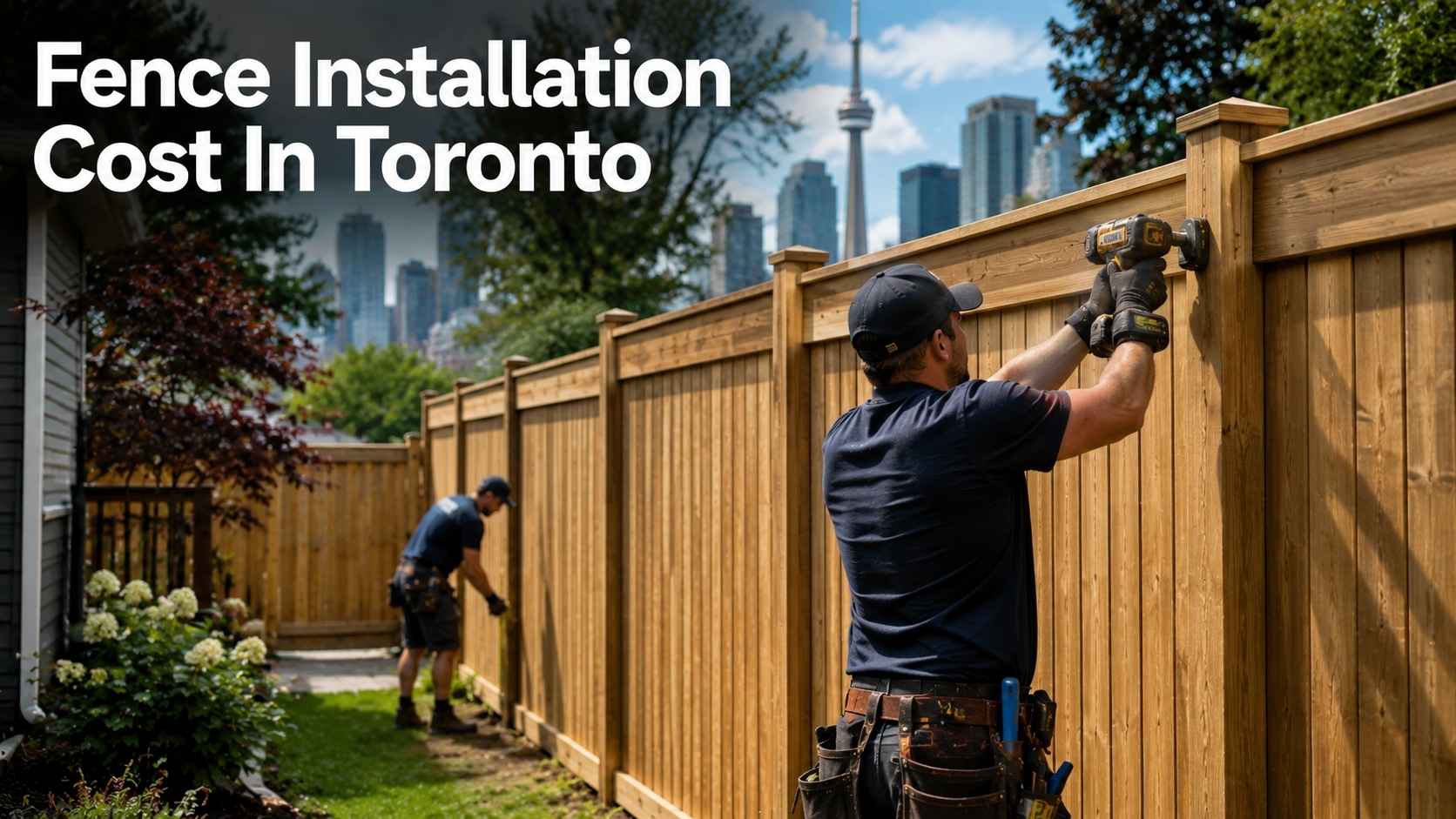
Fence installation in Toronto typically costs $40–$150+ per linear foot (materials + labour), with most residential projects falling between $4,000 and $14,000. The exact number depends on material, lot conditions, soil type, and fence length.
Want a quote tailored to your property? Contact We Are Bollards for a free on-site estimate.
Why Toronto Fence Costs Are Higher Than the National Average
If online pricing guides feel lower than what local contractors are quoting, you’re not being overcharged — Toronto is simply a more expensive market to operate in. Several factors drive this:
- Skilled trades shortage. The GTA faces a persistent shortage of qualified fence installers. High demand + low supply = higher rates.
- Post-2021 material costs. Supply chain disruptions reset pricing 30–60% above pre-pandemic averages. That new floor has held.
- Clay-heavy and rocky urban soil. Much of Toronto sits on dense clay or old urban fill with buried rubble. This dramatically increases post hole digging time and equipment wear — a cost most quote comparisons ignore entirely.
- Toronto’s frost line. Posts must be set 42–48 inches deep (below Toronto’s ~4 ft frost line) to prevent frost heaving. That’s significantly deeper than warmer regions, meaning more digging and more concrete per post.
- Bylaw complexity. Toronto Municipal Code Chapter 447 governs fence height, materials, and pool enclosures. Non-compliant fences require exemption applications, community council hearings, and potentially costly rework.
Bottom line: National or Ontario-wide price averages will consistently underestimate what fence installation in Toronto actually costs. Always get local quotes.
Fence Installation Cost by Material Type
Material choice is the biggest pricing variable. Here are realistic 2026 Toronto-market estimates (materials + labour, installed):
| Material | Cost per Linear Foot | Best For |
|---|---|---|
| Pressure-treated pine | $35 – $65 | Budget-conscious, short-term |
| Cedar privacy fence | $55 – $90 | Most popular Toronto backyard choice |
| Vinyl / PVC | $45 – $100 | Low maintenance, no staining |
| Chain link (galvanized) | $18 – $45 | Dog runs, perimeter, pool enclosures |
| Aluminum (ornamental) | $35 – $85 | Front yards, upscale look, zero rust |
| Composite | $70 – $150+ | Longest lifespan, premium finish |
| Wrought iron / steel | $80 – $200+ | Decorative, heritage properties |
A few things worth knowing:
Cedar handles Toronto’s freeze-thaw cycle well, but needs staining or sealing every 2–3 years. Neglected cedar deteriorates fast in the city’s wet springs and humid summers.
Vinyl costs more upfront than cedar but eliminates maintenance costs entirely. Over 10 years, the total cost of ownership is often comparable.
Composite is the fastest-growing choice in Toronto. It looks like wood, lasts 25–30+ years, and never needs staining. The higher upfront cost is offset by near-zero lifetime maintenance.
Chain link is the only economical option for pool enclosures — and under Toronto’s Fence Bylaw, small-gauge chain link is explicitly approved for that use.
For a 100-linear-foot fence, a rough total project budget by material looks like this:
| Material | Estimated Total (100 ft) |
|---|---|
| Chain link | $2,500 – $5,000 |
| Pressure-treated wood | $4,000 – $7,500 |
| Cedar privacy | $6,000 – $10,000 |
| Vinyl | $5,500 – $11,000 |
| Composite | $8,000 – $16,000+ |
These are estimates. Actual cost depends heavily on your site conditions — particularly soil type (see below).
The Hidden Cost Nobody Talks About: Post Hole Digging in Toronto’s Soil
This is the factor most competitor blogs skip, and it’s one of the most significant variables in your final bill.
Toronto’s frost line is approximately 4 feet (1.2 m). Any post set shallower than that will heave, lean, and fail as the ground freezes and thaws. A properly installed Toronto fence requires posts at 42–48 inches — significantly more digging, time, and concrete than the same fence in a warmer city.
On top of that, Toronto’s soil is notoriously difficult:
- Dense clay (common in The Annex, Leslieville, Roncesvalles, Riverdale) is hard to drill through and can triple the time needed per hole
- Urban fill and buried rubble (found widely in older Toronto neighbourhoods) can require switching from mechanical augers to manual digging
- Mature tree roots near property lines create additional obstacles
What this adds to your cost:
| Soil Condition | Approximate Add-On per Post Hole |
|---|---|
| Sandy / loamy (easy) | Included in base labour |
| Dense clay | +$5 – $15 per hole |
| Rocky or rubble / buried debris | +$15 – $40 per hole |
On a 20-post fence, rocky terrain alone can add $300–$800 that never appears in an initial estimate — and shows up as a surprise on the final invoice. Always ask your contractor how they handle difficult soil before signing.
We Are Bollards handles post hole digging as a core part of every project, with transparent pricing for Toronto’s soil conditions built into every quote.
Toronto Fence Bylaws — What Non-Compliance Costs You
Most cost guides mention bylaws briefly. What they don’t explain is what happens when you get it wrong.
Key rules under Toronto Municipal Code Chapter 447:
| Location | Maximum Height |
|---|---|
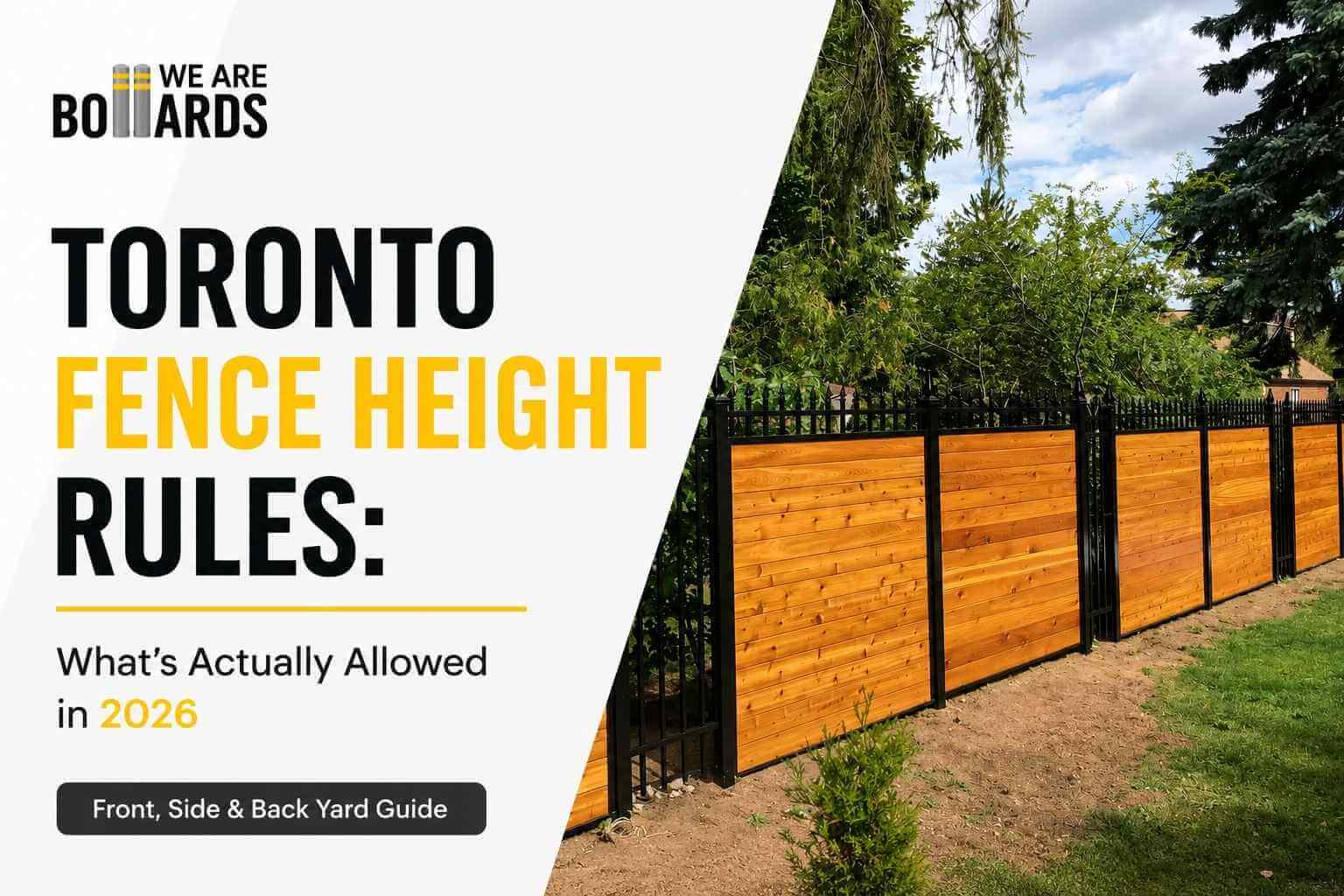
| Front yard | 1.2 m (approx. 4 ft) |
| Side yard / rear yard | 2.0 m (approx. 6 ft 6 in) |
| Adjacent to lane / walkway / non-residential | 2.5 m (approx. 8 ft 2 in) |
| Within 2.4 m of a driveway | Open-construction material only (e.g., chain link) |
Corner lots are treated differently — the street-facing side yard is subject to front-yard height limits, with additional sight-triangle restrictions near intersections.
Pool enclosures require a separate Zoning Certificate and Pool Fence Enclosure Permit, with mandatory self-closing, self-latching gates.
If your fence violates the bylaw:
- A Bylaw Enforcement Officer issues a Notice of Violation
- You must correct the issue or apply for a Fence Exemption (public application, non-refundable fee)
- If the exemption is denied at Community Council, you must modify or demolish the fence at your own cost
Rebuilding a non-compliant section can cost $2,000–$6,000 on top of what you already paid. Getting compliance right the first time is not optional — it’s financial protection.
Hidden Costs Most Quotes Leave Out {#hidden}
Before comparing contractor quotes, make sure you’re comparing the same scope. These line items are frequently omitted from initial estimates:
- Old fence removal: $6–$15 per linear foot for demolition and disposal
- Root grinding: Mature tree roots near the fence line cost $150–$400 per stump to clear
- Property survey: If boundaries aren’t clearly marked, a survey runs $1,500–$3,000 — but prevents far more expensive disputes later
- Grading / levelling: Sloped properties require stepped or raked panels — adds $5–$20 per linear foot
- Gate hardware upgrades: Automated or hydraulic self-closing gates are add-ons ($150–$800+)
- Soil disposal: Excavated post hole soil goes somewhere — budget $200–$600
- Pool fence permit: $200–$500 for the permit alone
- Utility locate delays: Before any digging, Ontario One Call (dial 811) must be contacted to flag underground gas, electrical, and water lines. This is legally required and free — but if a utility is flagged near your fence line, work pauses until it’s cleared. Always call 811 at least 5 business days before digging. Any contractor who doesn’t mention this is a red flag.
Seasonal Pricing & Neighbour Cost-Sharing Tips {#tips}
Best Time to Book
Most Toronto homeowners call fence contractors in April–June, which is peak season — highest prices, longest backlogs. Two smarter windows:
- September–October: Demand drops, crews are available, ground conditions are ideal. Many contractors offer end-of-season pricing.
- November–February: Lowest demand. Some contractors discount 10–15% to keep crews active. Best for booking spring installs in advance with a deposit.
Booking even 6–8 weeks ahead of your desired start date can save you both money and scheduling stress.
Can Your Neighbour Share the Cost?
Under Ontario’s Line Fences Act, the cost of a boundary fence can be shared between adjacent property owners. Either neighbour can initiate a written notice proposing the fence specs and a cost split. If no agreement is reached, either party can request the municipality appoint a fence-viewer — a neutral party who issues a binding cost decision.
The City of Toronto does not mediate fence disputes directly, but the provincial Line Fences Act process applies. Get any cost-sharing arrangement documented in writing before work starts. Many Toronto homeowners with deteriorating shared fences leave money on the table by not knowing this process exists.
How We Are Bollards Approaches This
At We Are Bollards, we don’t publish a single price per foot and call it a day — because Toronto’s soil, bylaws, and lot conditions make that approach misleading. Every project starts with a proper site assessment.
What’s included in every quote:
- Itemized breakdown — materials, labour, post holes, concrete, and disposal
- Frost-line-compliant post depth for Toronto’s climate
- Toronto bylaw compliance built into the design
- Ontario One Call coordination before any digging begins
Get a Free, No-Obligation Estimate →
FAQ: Fence Installation Cost in Toronto
How much does fence installation cost in Toronto in 2026? Most residential projects fall between $4,000 and $14,000. Cost per linear foot ranges from roughly $40 (chain link) to $150+ (premium composite). Contact We Are Bollards for a quote specific to your property.
Do I need a permit for a fence in Toronto? Usually no — standard residential fences don’t require a building permit. Exceptions: pool enclosures (require a Zoning Certificate + Pool Fence Enclosure Permit) and fences exceeding bylaw height limits (require a Fence Exemption application through Community Council).
How deep do fence posts need to be in Toronto? Posts should be set 42–48 inches below grade to clear Toronto’s approximately 4-foot frost line. Shallower posts will heave and fail over time.
What fence material lasts longest in Toronto? Composite (25–30+ years), followed by vinyl (20–25 years) and aluminum (20+ years). Cedar lasts 15–20 years with proper maintenance. Pressure-treated pine runs 10–15 years.
Can my neighbour be forced to share fence costs? Under Ontario’s Line Fences Act, yes — through a formal process that can result in a binding cost-sharing order from a municipal fence-viewer. Get any agreements in writing before work begins.
Is fall a cheaper time to install a fence in Toronto? Generally yes. September–October sees lower demand and often better contractor availability. Booking in winter for a spring install can also yield savings compared to calling during the spring rush.
Final Thoughts
Fence installation cost in Toronto isn’t captured by a single number. Your final price is shaped by material, soil conditions, frost-depth requirements, bylaw compliance, and a list of site-specific variables that generic guides — and many contractor estimates — routinely ignore.
Get a quote from someone who knows Toronto’s conditions, not a national pricing calculator.
Contact We Are Bollards — transparent pricing, bylaw-compliant installs, no hidden fees.