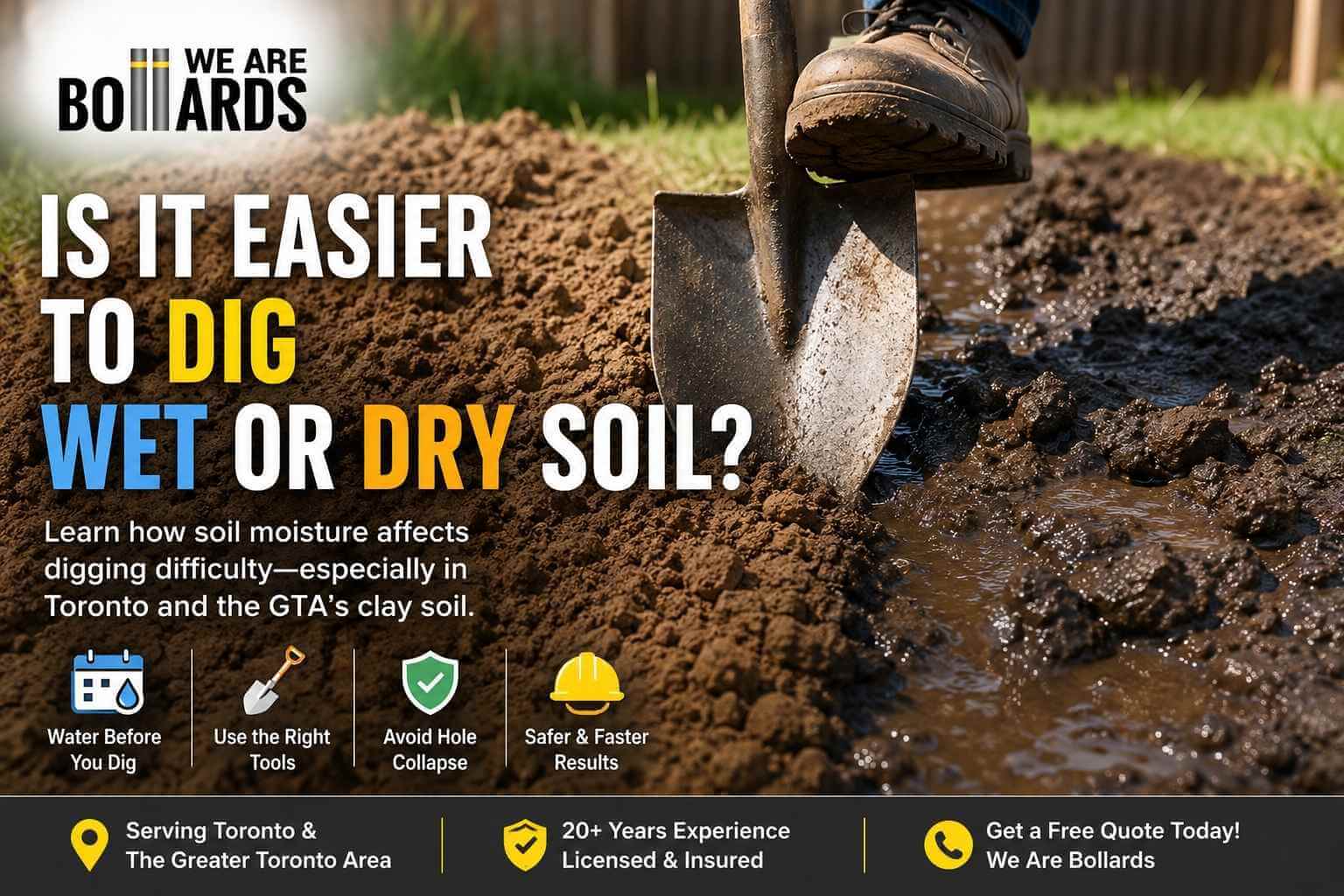
In most cases, slightly moist soil is easier to dig than bone-dry soil, but soil that is too wet becomes heavy, sticky, and hard to shovel. The sweet spot is soil with just enough moisture to loosen its grip without turning into mud. This is especially true in Toronto and the Greater Toronto Area (GTA), where dense clay soil can swing from rock-hard to concrete-like sludge depending on rainfall.
If you’re planning to dig post holes, plant a fence, or start any excavation project, knowing how soil moisture affects digging difficulty can save you hours of hard labour — and a lot of frustration.
Quick Answer: Wet vs Dry Soil Digging
| Soil Condition | Digging Difficulty | Why |
|---|---|---|
| Bone-dry soil | Hard | Compacted particles resist the shovel or auger |
| Lightly moist soil | Easiest | Particles separate cleanly without sticking |
| Saturated/wet soil | Hard | Soil becomes heavy, sticky, and prone to collapsing back into the hole |
| Wet clay soil (common in Toronto) | Very hard | Clay binds together into a dense, sticky mass that clings to tools |
Why Slightly Wet Soil Is Usually Easier to Dig
Dry soil particles pack tightly together, especially in clay-heavy ground. This compaction creates resistance, forcing you to use more force with every shovel strike or auger turn.
Adding a small amount of moisture works like a lubricant. Water fills the tiny gaps between soil particles, breaking the bonds that hold compacted dirt together. This is the same principle behind soaking a fence post hole location the night before digging — a common trick used by experienced landscapers across the GTA.
Key benefits of digging lightly moistened soil:
- Reduces the force needed to break through compacted layers
- Loosens clay particles without turning them into paste
- Lowers the risk of tool damage from repeated impact on hard ground
- Speeds up manual and auger-based digging alike
When Wet Soil Becomes Harder to Dig
Once soil crosses from “moist” into “saturated,” digging gets significantly harder. This is common after heavy rain or overwatering.
Problems with digging saturated or waterlogged soil:
- Added weight — Wet soil can weigh significantly more per shovel load than dry soil.
- Sticking and clogging — Wet clay clings to shovels, augers, and post hole diggers, forcing frequent stops to clean tools.
- Hole collapse — Saturated soil walls are unstable and can slump back into the hole before you finish.
- Poor footing — Muddy digging sites are slippery and unsafe, especially on sloped or uneven ground.
This is why professional crews rarely dig immediately after a downpour. Instead, they wait for the ground to reach a workable moisture level, or use equipment designed to handle heavier, denser soil.
Toronto and GTA’s Clay Soil Problem
Toronto and much of the GTA sit on dense clay soil, which behaves very differently from sandy or loamy ground.
- Dry clay hardens into a compact, almost cement-like layer that resists standard shovels.
- Wet clay becomes thick, sticky, and difficult to lift, often clumping onto tools in heavy chunks.
- The workable window is narrow. Clay soil in the GTA often needs to hit a very specific moisture level before it digs cleanly — too dry and it won’t budge, too wet and it turns to sludge.
This narrow window is one of the main reasons DIY post hole digging projects in Toronto take longer than expected. Homeowners often either fight through hardpan clay or end up digging through mud after watering too aggressively.
How to Prepare Soil Before Digging
If you’re digging manually, these steps can make the process noticeably easier:
- Water the area lightly 12–24 hours before digging, rather than right before you start.
- Avoid oversaturating — a light, even soak is enough; standing water is a sign you’ve gone too far.
- Test with a shovel — soil should hold together loosely when squeezed, not drip water or crumble to dust.
- Dig in stages on hot days, since dry clay can harden again within hours if the surface dries out.
- Use the right tool for the soil type — a standard shovel struggles in GTA clay, while an auger or post hole digger designed for dense soil performs far better.
Best Tools for Digging Clay vs Regular Soil
| Tool | Best For | Notes |
|---|---|---|
| Standard shovel | Loose, sandy, or loamy soil | Struggles in compacted clay |
| Post hole digger (clamshell) | Small, narrow holes in moderate soil | Slow in hard clay |
| Power auger | Clay-heavy soil, multiple post holes | Handles GTA clay far more efficiently |
| Mattock or digging bar | Breaking up dry, compacted clay | Used before shoveling |
Why This Matters for Post Hole Digging in Toronto
Whether you’re setting fence posts, deck footings, or bollards, soil condition directly affects how clean, accurate, and fast the job goes. Toronto’s clay-heavy ground, combined with rocks and tree roots in older neighbourhoods, makes DIY digging unpredictable — a hole that looks easy in the morning can turn into a muddy mess by afternoon if it rains.
This is exactly why We Are Bollards brings over 20 years of hands-on experience digging in Toronto and GTA soil conditions. Our licensed and insured team assesses soil type on-site, uses the right equipment for clay, sand, or rocky ground, and coordinates utility locates through Ontario One Call before any digging begins — so your post holes come out clean, accurate, and ready for posts, fences, or bollards without the guesswork.
FAQs
Is it easier to dig in wet or dry dirt? Lightly moist dirt is generally easier to dig than completely dry dirt, since moisture loosens compacted particles. However, dirt that is too wet becomes heavy and sticky, making it harder to dig than dry dirt in some cases.
Is wet soil easier to dig? Slightly wet soil is usually easier to dig than dry soil because moisture reduces compaction. Fully saturated soil, on the other hand, is often harder to dig due to added weight and stickiness.
Does wetting the ground make it easier to dig? Yes, in most cases. A light, even watering the day before digging softens compacted soil. Overwatering, however, can make the ground muddy and more difficult to work with.
Does wetting soil make it easier to dig? Wetting soil in moderation makes it easier to dig by loosening particle bonds. Excess water reverses this benefit, especially in clay-heavy soil common across Toronto and the GTA.
Is dirt easier to dig when wet? Dirt is easier to dig when lightly wet, but significantly harder to dig when saturated, particularly if the dirt has a high clay content.
Is it easier to dig wet or dry clay soil? Neither extreme is ideal. Dry clay soil is hard and compact, while wet clay soil becomes sticky and heavy. The easiest digging happens when clay soil is lightly moist — a narrow window that’s common in Toronto’s dense clay ground.
Get Professional Help With Tough Toronto Soil
Fighting compacted or waterlogged clay soil isn’t worth the time or effort. We Are Bollards provides professional post hole digging in Toronto and across the GTA, backed by 20+ years of local experience with clay, sand, and rocky ground conditions.
From site assessment and utility locates to precise drilling and optional concrete filling, our licensed and insured team handles the hard part so your fence, deck, or bollard project stays on schedule.
Contact We Are Bollards today for a free quote.