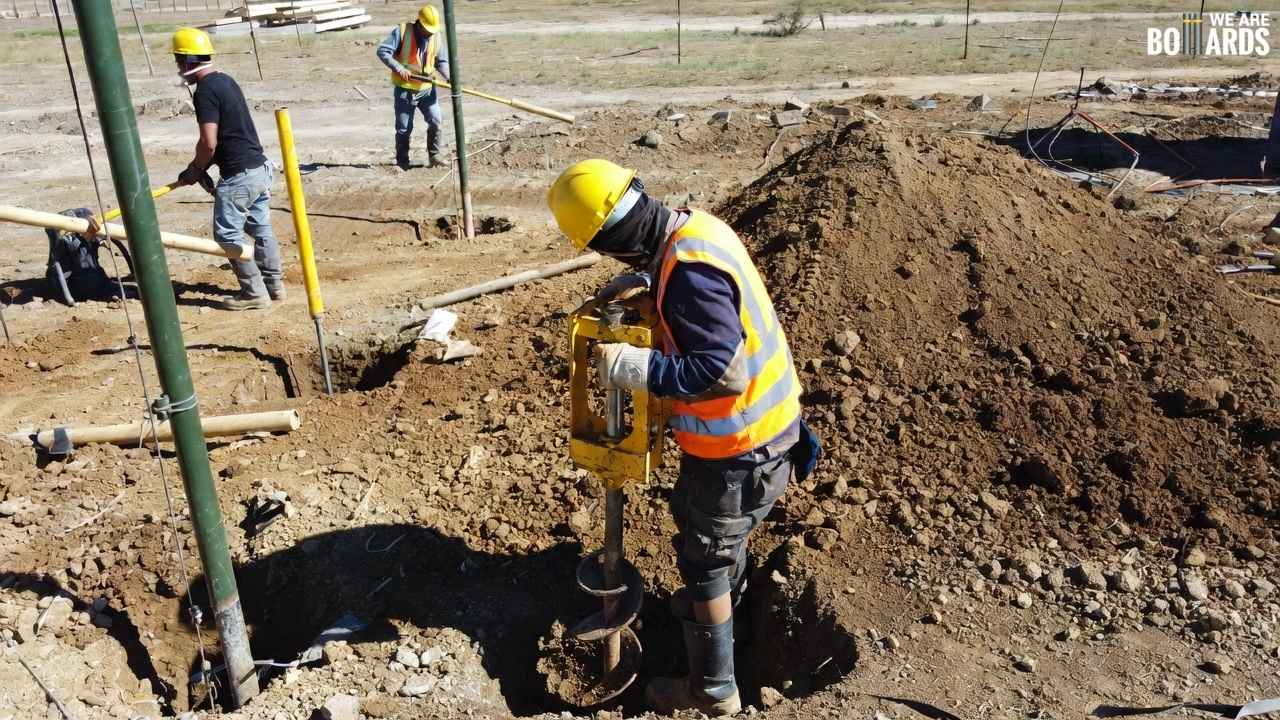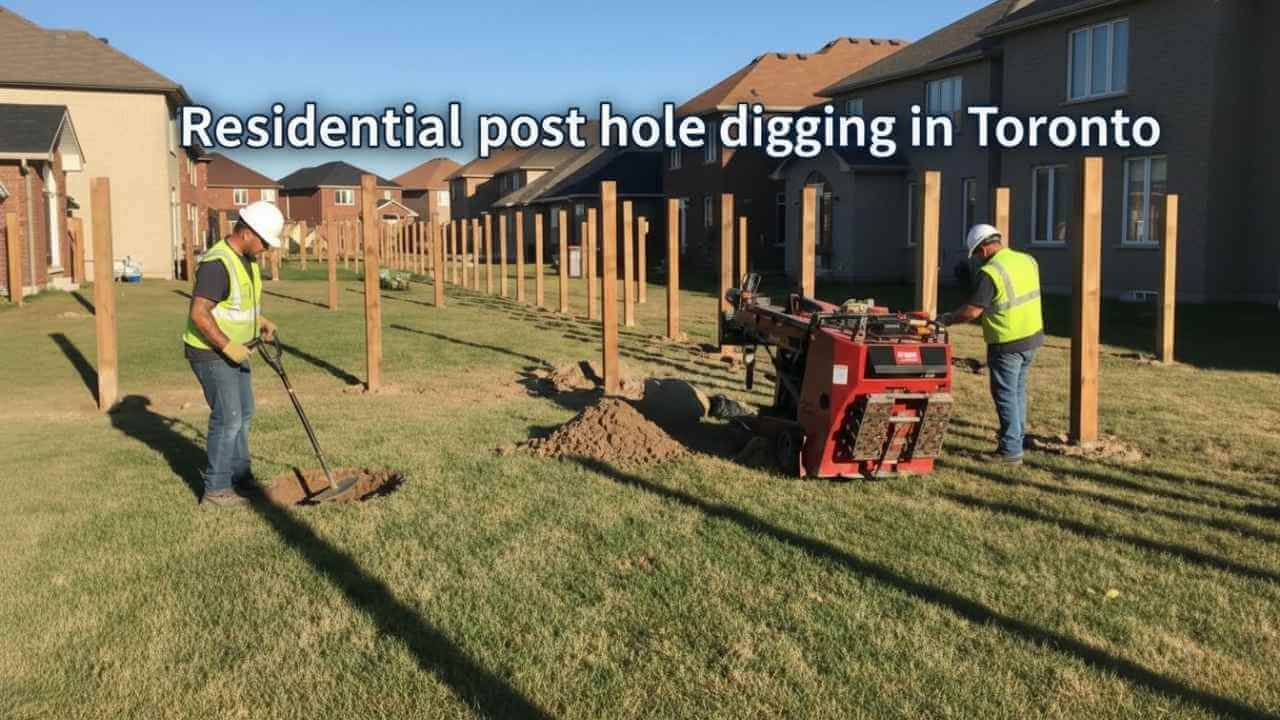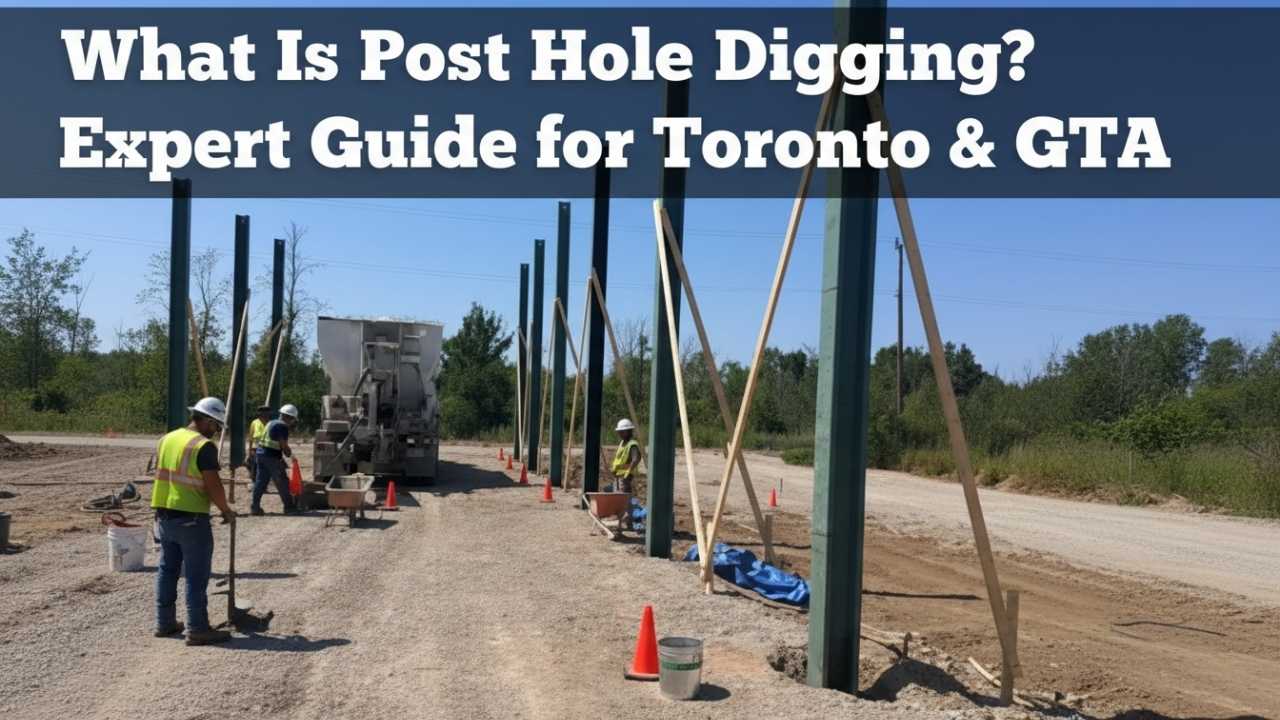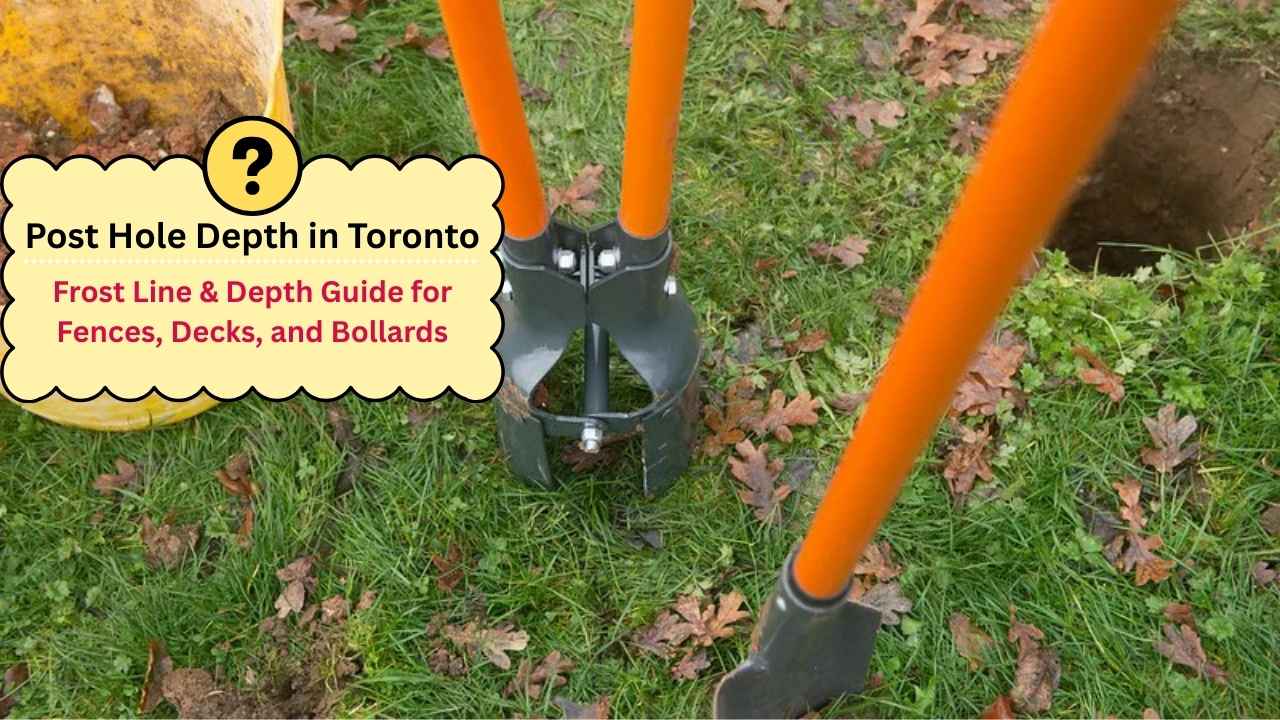
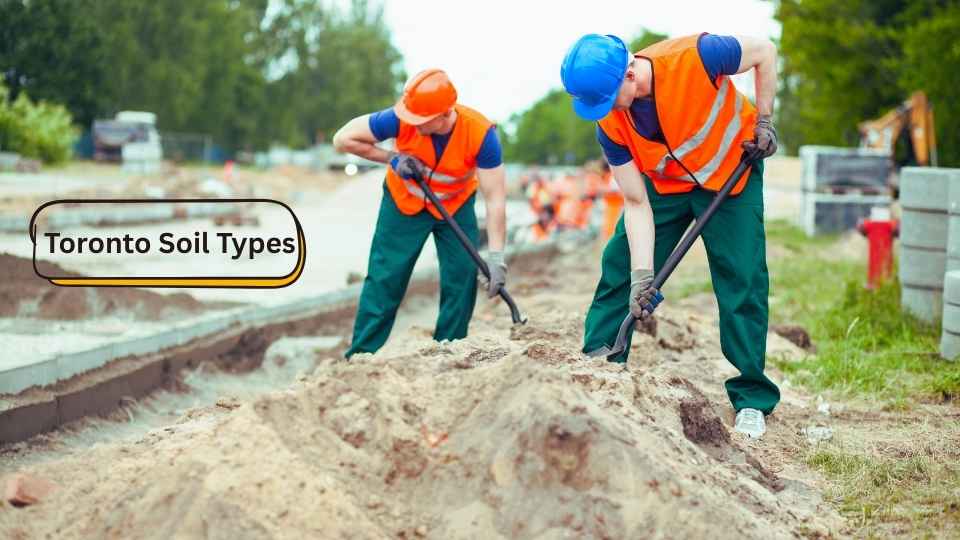
If you’re planning to dig post holes in Toronto or the Greater Toronto Area, the most important factor to understand is the soil underneath. Toronto soil for post hole digging often includes dense clay, mixed fill, rocks, and moisture-heavy layers that affect depth, stability, and long-term performance.
In simple terms: your soil type decides whether posts stay firm or start shifting.
As a local installation company serving Toronto and the entire GTA, We Are Bollards has seen every soil challenge from hard-packed clay in Vaughan to sandy pockets in Pickering. This guide explains what homeowners must know before digging, how soil impacts your project, and when to call a professional.
Why Soil Matters for Post Hole Digging
Different soil types behave differently. Some drain well. Some expand and contract. Some freeze deeper in winter. All of these shapes:
- Required digging depth
- Concrete stability
- Drainage and frost protection
- Post longevity
- Installation cost
Ignoring soil conditions is the #1 reason fences lean, deck posts shift, and bollards tilt.
Common Toronto Soil Types and How They Affect Digging
Toronto and the Greater Toronto Area have complex soil layers shaped by glaciers and decades of construction. Here’s what most homeowners will encounter:
1. Clay Soil Toronto (Most Common and Most Difficult)
Clay dominates many Toronto neighborhoods North York, Scarborough, Vaughan, Markham, Brampton, and Etobicoke.
Characteristics:
- Hard when dry
- Sticky when wet
- Poor drainage
- Expands during freeze/thaw cycles
Impact on post hole digging:
- Harder to dig manually
- Holes cave in when wet
- High risk of frost heave
- Requires deeper digging (3–4 feet minimum)
Best practice:
Add gravel at the base to improve drainage and prevent heaving.
2. Sandy Soil Toronto (Found in pockets across Pickering, Whitby, Ajax)
Characteristics:
- Easy to dig
- Drains very well
- Can collapse during digging
- Requires reinforcement during installation
Impact on post hole digging:
- Holes need more structure
- Posts can shift if not properly compacted
Best practice:
Use more concrete or thicker gravel base to stabilize the post.
3. Mixed Fill and Construction Soil (Common in new subdivisions)
Found in East Gwillimbury, Milton, Whitby, Caledon, Burlington, Bowmanville.
Characteristics:
- Mixed soil, stone, construction debris
- Density varies hole to hole
Impact:
- Harder to predict digging depth
- May require power augers for consistent results
4. Loam Soil (Easiest for installations)
Less common, but found in parts of Aurora, King City, Nobleton, and Newmarket.
Characteristics:
- Balanced drainage
- Ideal density
- Easy to dig
Impact:
Creates highly stable installations.
Frost Line Toronto: Why Depth Matters More Than You Think
Toronto’s frost line typically reaches 36–42 inches, depending on the area.
Why this matters:
- Posts above the frost line will shift every winter
- Concrete will crack
- Bollards or fence posts will lean
Rule:
Always dig below the frost line.
For most Toronto and GTA soil types → Minimum 3.5 to 4 feet deep.
Post Hole Depth Toronto: Recommended Standards
| Installation Type | Minimum Depth | Notes |
| Fence posts | 3–4 feet | Depends on soil type |
| Deck posts | 4+ feet | Must be below frost line |
| Bollards | 3–5 feet | Depends on security rating |
| Gate posts | 3.5–4.5 feet | Clay soil requires deeper holes |
How Soil Affects Post Stability (What Homeowners Don’t Realize)
Clay moves. Sand shifts. Moist soil expands.
Here’s how different soils impact your project long term:
- Clay → high frost heave = posts rise in winter
- Sand → poor lateral hold = posts tilt without proper compaction
- Loam → best stability
- Fill → unpredictable density = uneven support
If your posts fail, the soil, not the post, is usually the reason.
Common Homeowner Mistakes When Digging Post Holes
These are issues we see weekly across Toronto and the GTA:
1. Digging too shallow
Leads to tilting within 12–24 months.
2. Using the wrong soil mix or concrete
Clay-heavy soils need drainage gravel.
3. Ignoring the frost line
Toronto’s winters guarantee future shifting if depth is wrong.
4. Not checking underground utilities
Always call Ontario One Call.
5. Digging the hole too wide
Reduces soil compaction and weakens the base.
Cost Considerations for Post Hole Digging in Toronto
Costs for post hole digging in Toronto and the GTA depend entirely on soil type, depth requirements, accessibility, and the number of holes needed. Heavy clay, deep frost-line digging, rocky soil, and tight backyard spaces require more labour and equipment.
Because every property and soil condition is different, the most accurate way to get pricing is to contact us directly with your location and project details.
You can reach us for a fast quote through the website or WhatsApp.
Tips to Prevent Problems With Toronto Soil
1. Add gravel at the bottom
Improves drainage and stability.
2. Use proper concrete mix
Fast-setting concrete is ideal for sandy or mixed fill soil.
3. Compact soil around the post
Never skip this step.
4. Dig deeper in clay-heavy neighborhoods
Going an extra 6–12 inches pays off.
5. Avoid digging after heavy rain
Clay turns to mud and collapses.
When to Call a Professional in Toronto & GTA
You should call a professional if:
- Your soil includes clay, rocks, mixed fill, or excessive moisture
- You need holes deeper than 3.5–4 feet
- You’re installing load-bearing posts or security bollards
- The project is near utilities, driveways, or retaining walls
- You need consistent depth across multiple holes
At We Are Bollards, we’ve dug and installed thousands of posts in every type of Toronto and GTA soil.
Why Choose Us for Post Hole Digging in Toronto & GTA
Homeowners choose us because:
1. We understand Toronto soil conditions better than anyone
Every neighborhood has its own soil profile we’ve worked in every one.
2. We use commercial-grade augers
Power that cuts through heavy clay and rocky soil.
3. We guarantee correct frost-line depth
No shifting. No leaning. No surprises.
4. We specialize in bollard and post installations
Security and structural posts require expert precision.
5. We serve all surrounding cities
Richmond Hill, Vaughan, Thornhill, Maple, Aurora, King City, Nobleton, North York, Mississauga, Markham, Pickering, Whitby, Ajax, Brampton, Scarborough, Etobicoke, Milton, Stouffville, Woodbridge, Bolton, Oshawa, Georgetown, Burlington, Bowmanville, Barrie and more.
For expert post hole digging or bollard installation, you’re in the right place.
FAQs
1. What is the most common soil type in Toronto?
Clay soil is the most common and the most challenging for post hole digging.
2. How deep should post holes be in Toronto?
Most installations require 3.5–4 feet to stay below the frost line.
3. Does Toronto’s frost line affect post installations?
Yes, digging below it prevents shifting and winter movement.
4. Is clay soil bad for post stability?
It’s not bad, but it requires proper drainage and deeper installation.
5. Can you dig post holes in winter?
Yes, but frozen clay makes digging more difficult and time-consuming.
6. Do different GTA cities have different soil conditions?
Yes, Markham has dense clay, Pickering has more sand, and new suburbs have mixed fill.
7. When should I hire a professional?
If your soil is clay-heavy, rocky, deep, or requires security-grade posts like bollards.
Conclusion
If you want safe, stable, long-lasting posts that won’t shift, let the experts handle it.
We’ve worked with every Toronto soil type and guarantee proper frost-line depth, stability, and professional installation.